STRONG CASES FOR AN INDEPENDENT REPUBLIC OF OROMIA
Published Aug. 9, 2026, 2:34 a.m. by FNN
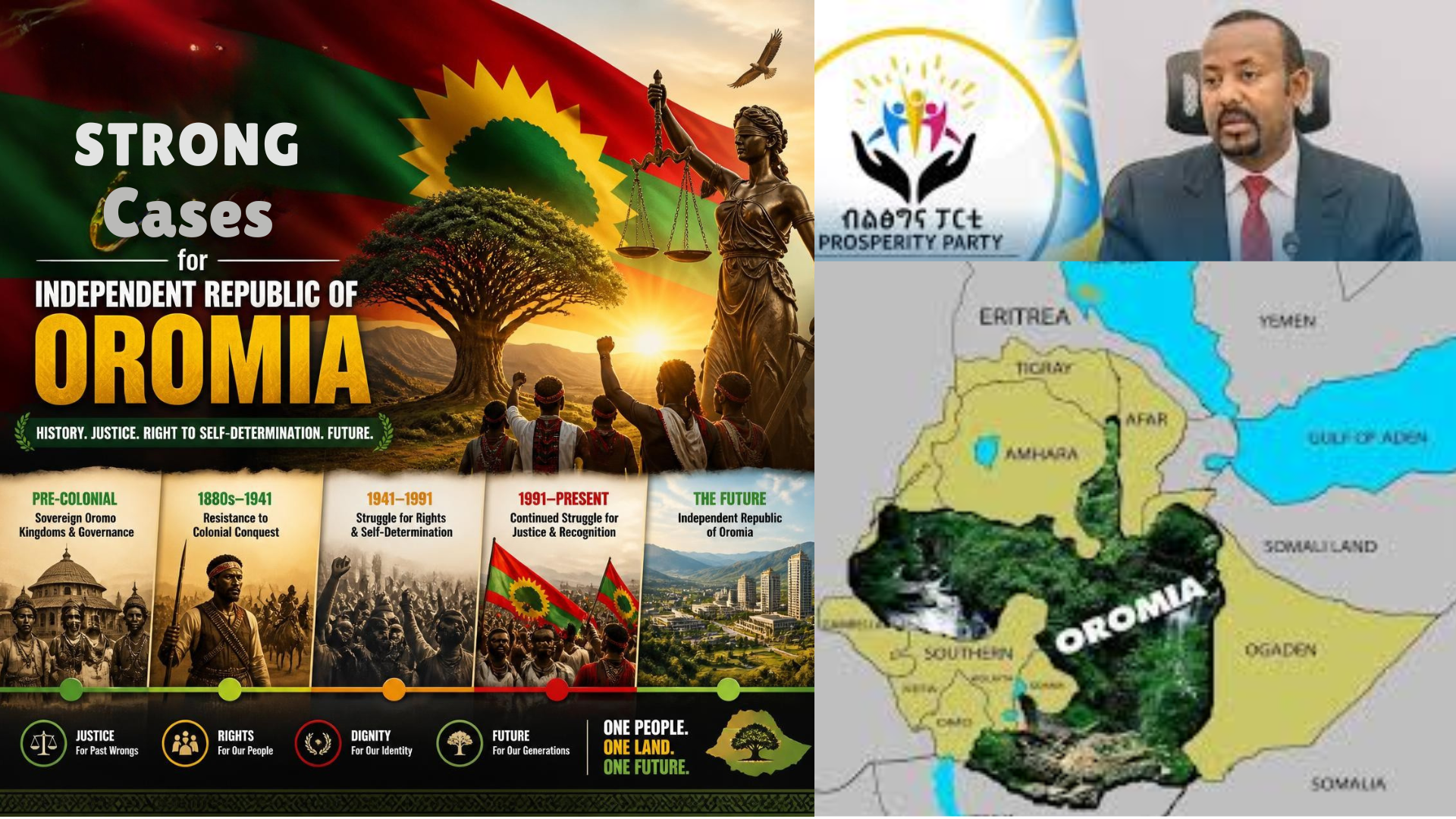
The question of an Independent Oromia cannot be reduced to who occupies political office in Ethiopia today. It is fundamentally a question of history, sovereignty, national identity, territorial authority, and the right of the Oromo people to determine their own political future.
The historical record is substantial. During the late nineteenth century, Menelik II’s Abyssinian empire expanded into Oromo and other southern territories. Historical scholarship documents military conquest, establishment of garrisons, land expropriation, tribute and labor obligations, and loss of political autonomy in major Oromo territories. Menelik’s own 1891 circular to European powers, issued during the Scramble for Africa, declared that he would not remain an “indifferent spectator” while distant powers partitioned Africa and asserted expansive territorial claims extending into Oromo country. These are historical documents—not contemporary political slogans.
Oromo society existed before incorporation into the Ethiopian Empire. Oromo communities possessed their own political institutions, including the Gadaa system, today recognized by UNESCO as an indigenous democratic socio-political institution.
A central argument now advanced by Ethiopia’s ruling establishment is that the Oromo are already liberated because Oromia has a regional government, Afaan Oromo has broader official recognition, Oromo politicians occupy powerful positions, and Oromo figures such as Gobana Dache participated in building Ethiopia. Prime Minister Abiy Ahmed has recently repeated this argument publicly.
But participation is not sovereignty.
An Oromo may become Prime Minister of Ethiopia, just as Gobana could command Menelik’s army, without the Oromo nation itself becoming sovereign. Oromia has no independent seat at the United Nations or African Union, no independent foreign policy, no treaty-making authority, no sovereign citizenship or passport, no independent control of international borders, and no independent defense authority. Those powers belong to the Ethiopian state.
Present realities also challenge the claim that the Oromo national question has been resolved. Reuters documented the operation of Koree Nageenyaa, a secretive security committee whose orders were linked to extrajudicial killings and illegal detention in Oromia. Reuters reported dozens of killings, hundreds of arrests and an internal record identifying more than 1,000 people arrested on the committee’s orders. Other independent institutions have documented unlawful killings, arbitrary detention and serious abuses involving state security forces in Oromia.
Territorial questions remain unresolved as well. Finfinne sits within Oromia even under Ethiopia’s Constitution, while disputes concerning land, metropolitan expansion and Oromia’s constitutional interests persist. Wollo contains longstanding Oromo homeland areas and remains part of the Oromo national-territorial claim.
Article 39 of Ethiopia’s Constitution currently recognizes self-determination, including secession. But Oromo self-determination cannot depend solely upon a constitutional provision that Ethiopian political authorities may seek to amend. The Oromo national question predates the present Constitution.
The central issue is therefore straightforward:
Being represented in Ethiopia is not the same as possessing Oromo sovereignty.
The ultimate democratic question is whether the Oromo people freely choose continued incorporation within Ethiopia—or choose to exercise self-determination as an Independent Republic of Oromia.
Read the attached evidence dossier. Examine the historical record. Judge the case on the evidence.
Similar posts:
Yakka Saamicha Qabeenyaa Qarshii Miiliyoona 5 Olii, Cunqursaa Gurmaa'e Caasaa Gadii fi Balaa Nyaataa fi Yaalii Fayyaa Lubbuu Da'ima koo Irra Ga'e Beeksisuu
OSG Report 74: New Human Rights Report Documents Continued Killings, Forced Conscription and Displacement in Oromia
GABAASA TAATEE TORBAN KANAA.
GABAASA TORBAN KANAA